Currently Empty: ₹0.00
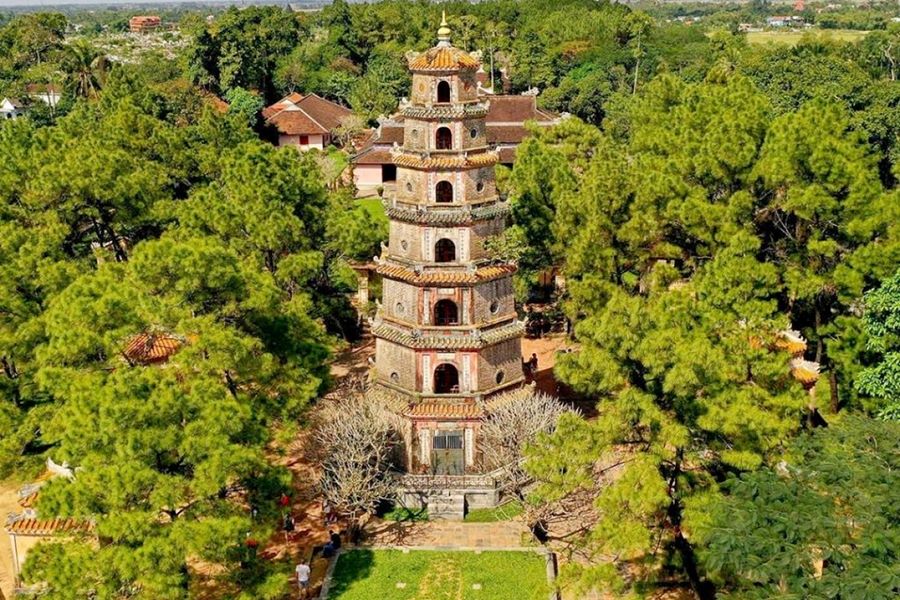
Thien Mu Pagoda — Hue, Vietnam
Introduction:
Thien Mu Pagoda, or the “Heavenly Lady Pagoda,” is one of the most iconic landmarks in Vietnam. Situated on the banks of the Perfume River in Hue, this 7-story pagoda is a symbol of the city’s deep spiritual and cultural heritage. A place of serenity and religious significance, it offers visitors a chance to explore the rich traditions of Vietnamese Buddhism while enjoying breathtaking views.
Timing to Visit:
The best time to visit Thien Mu Pagoda is during the early morning or late afternoon. The serene ambiance and cool weather during these times offer an ideal experience for meditation and reflection. If you want to experience the pagoda’s tranquility without the crowd, aim for weekdays.
Address:
Thien Mu Pagoda is located on Ha Khe Hill, 5 kilometers west of the Imperial City of Hue, Vietnam. The pagoda sits on the banks of the Perfume River, a picturesque setting that adds to its spiritual charm.
Timing of Visit:
- Open every day: 7:00 AM – 6:00 PM
- Ideal visit time: 7:00 AM to 9:00 AM or 4:00 PM to 6:00 PM
Why We Visit There:
Thien Mu Pagoda attracts visitors for its historical, cultural, and spiritual significance. It is not only a sacred site for Vietnamese Buddhists but also a place of peaceful retreat. The pagoda offers:
- Scenic Views: The pagoda’s hilltop location provides panoramic views of the Perfume River and surrounding landscapes.
- Cultural Insights: Visitors can explore the religious artifacts, statues, and intricate architecture of the pagoda.
- Historical Value: The pagoda has played an important role in Vietnam’s history, especially in the Buddhist movement during the 1960s.
- Peaceful Atmosphere: The tranquil surroundings make it an ideal place for meditation and reflection, allowing visitors to connect with their inner peace.
Story of This Temple:
The story of Thien Mu Pagoda dates back to 1601, during the reign of Emperor Nguyen Hoang, who built the pagoda on a hilltop to mark a spiritual victory for the country. The name “Thien Mu” translates to “Heavenly Lady,” referring to a mystical woman who prophesied the arrival of a great Buddhist leader. The pagoda has witnessed many historical milestones, including being a center for Buddhist activism during the Vietnam War. One of its most notable figures is Thich Quang Duc, the Buddhist monk who famously self-immolated in protest of religious persecution in 1963. This act is a symbol of the Buddhist community’s peaceful resistance.
What to Expect:
Visitors can see:
- The Main Pagoda: The 7-story tower, one of the tallest in Vietnam, is an iconic structure and the focal point of the complex.
- The Bell Tower: A large bronze bell that is rung during important Buddhist ceremonies.
- The Imperial Stupa: Houses the ashes of the famous monk Thich Quang Duc.
- Gardens and Statues: Peaceful gardens adorned with statues of Buddha, offering a perfect space for contemplation.
Contact Us:
For more information and bookings:
- Website: www.indianvedicastrologer.com
- Email: info@indianvedicastrologer.com